AI project intelligence for construction teams

Problem
A construction project manager spends most of the day chasing coordination — change orders, subcontractor emails, drawing versions, whether the site did what the plan said.
The gap between plan and site quietly costs real money. A missed change order shows up in the P&L, not in the tool, and most project software just records the work rather than surface what's slipping.
The other constraint is adoption. Any new tool has to survive the field. The moment a busy crew is asked to change how they work, the tool loses.
Approach
I used Intent-Centered Design against three roles separately — owner, project manager, and operations manager. Each carries a different cognitive load and a different definition of "the risk to know about right now." Success metrics were set alongside the construction partner, Integrity Construction LLC, before any screen was drawn: if the product can't move a number the partner already measures, it isn't working.
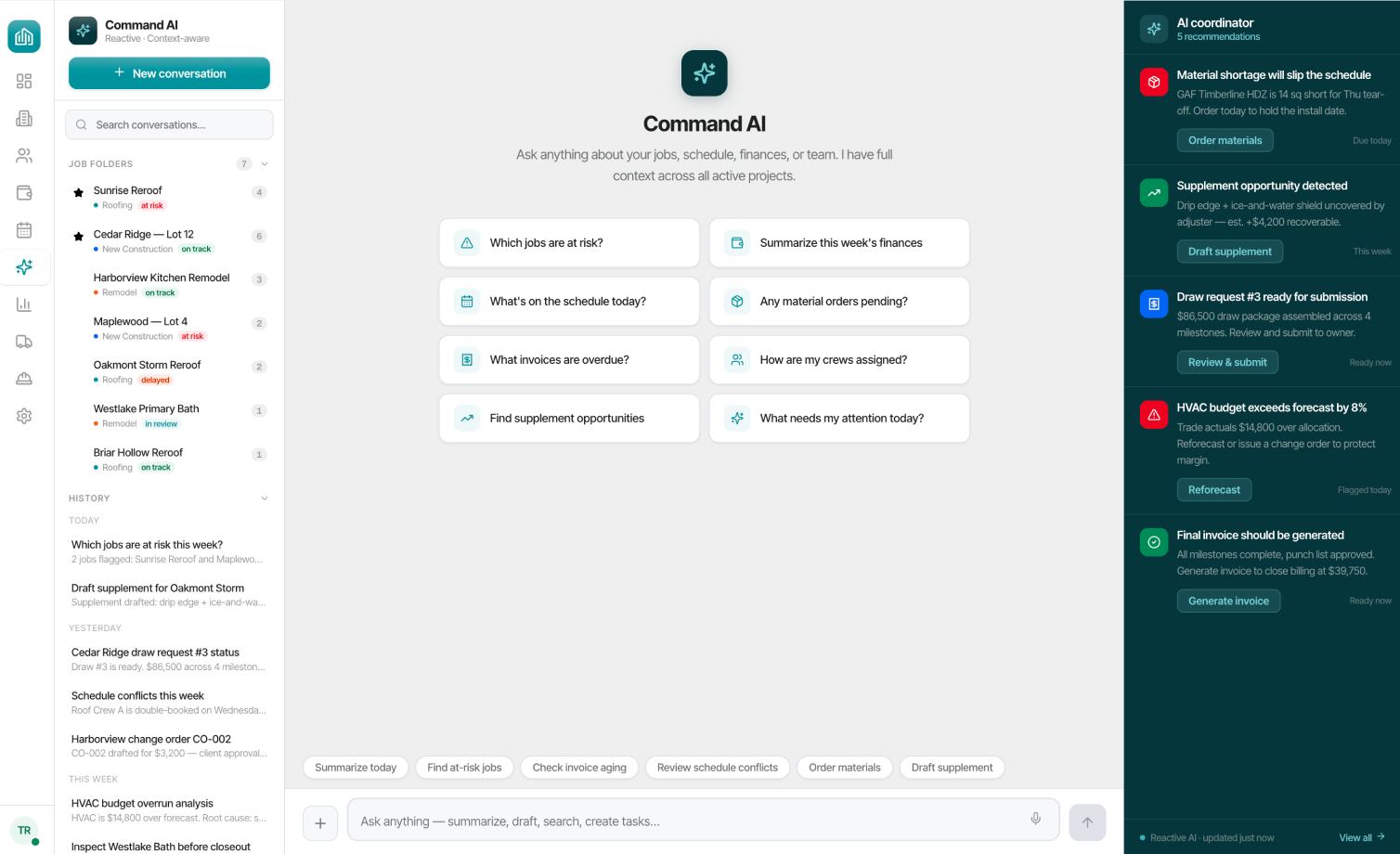
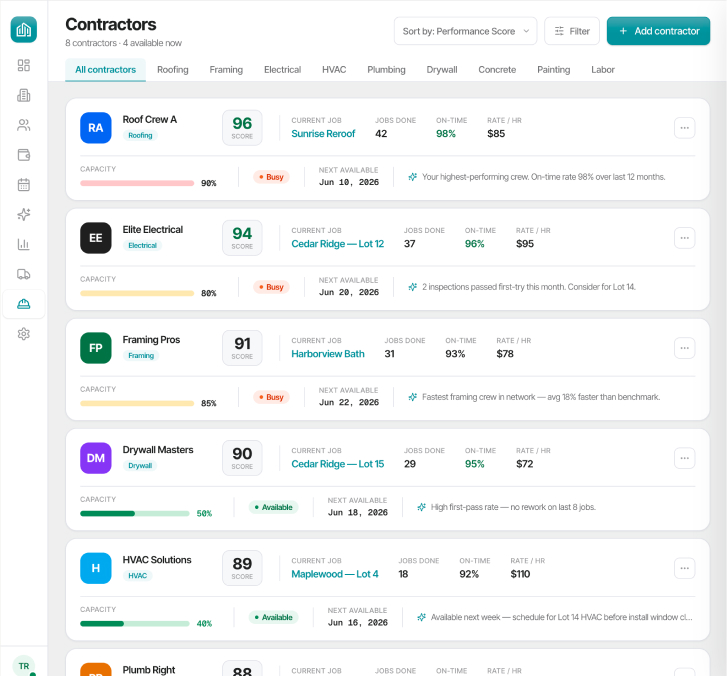
The system is Reactive — it stays ahead of the team, reading contracts, RFIs, submittals, and site activity, then surfacing the highest-priority gap for that role before it's asked, with the source document alongside so the team can check what the system saw. Voice is the primary input because a PM in the field can't stop to type.
What it does
Stays ahead of the team — reads contracts, RFIs, submittals, and site activity, then surfaces the gap before it becomes a change order.
Explainability by default — every risk points back to the source document that triggered it, so the team can check what the system saw.
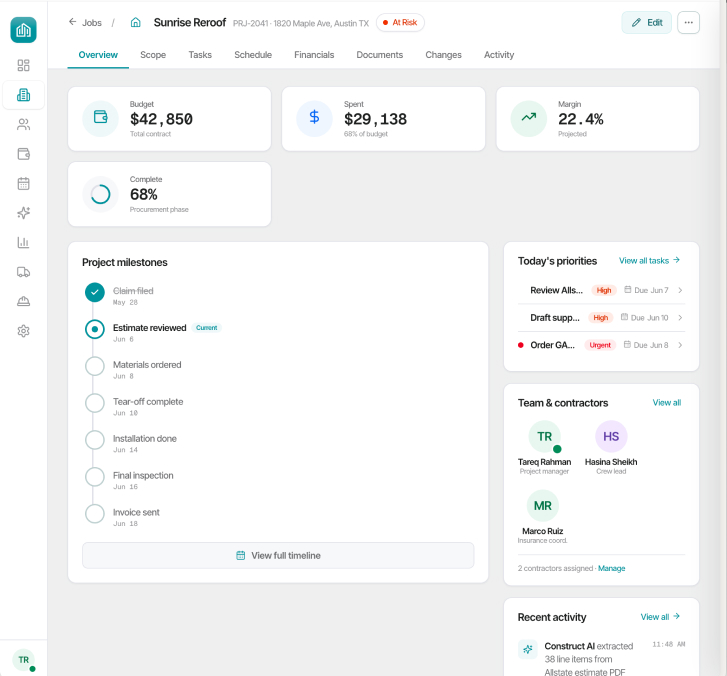
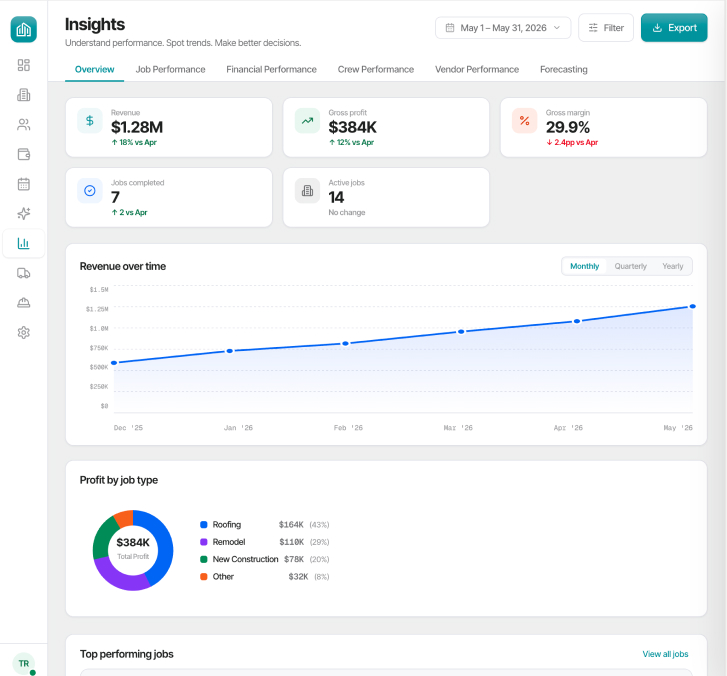
Meets the team where they are — role-aware views for owner, project manager, and operations manager: the risk that matters right now, framed for the person holding it.
Transparent under pressure — says "I'm not sure" out loud on low-confidence output, which is how it earns trust on the high-confidence output.
Defers to the human at the right moment — quantifies the dollar impact of a decision before anyone signs; the team decides, the system informs.